UPDATED OCTOBER 2026 | TROUBLESHOOTING GUIDE | TOP THREAD AND BOBBIN THREAD
Why Does My Sewing Machine Thread Keep Breaking
Sewing machine thread breaking is one of the most common problems at home, and almost every cause is something you can fix yourself in a few minutes. This guide shows how to find out which thread is breaking, the usual causes, and the exact fix for each one.
Quick Answer: Why Does My Sewing Machine Thread Keep Breaking?
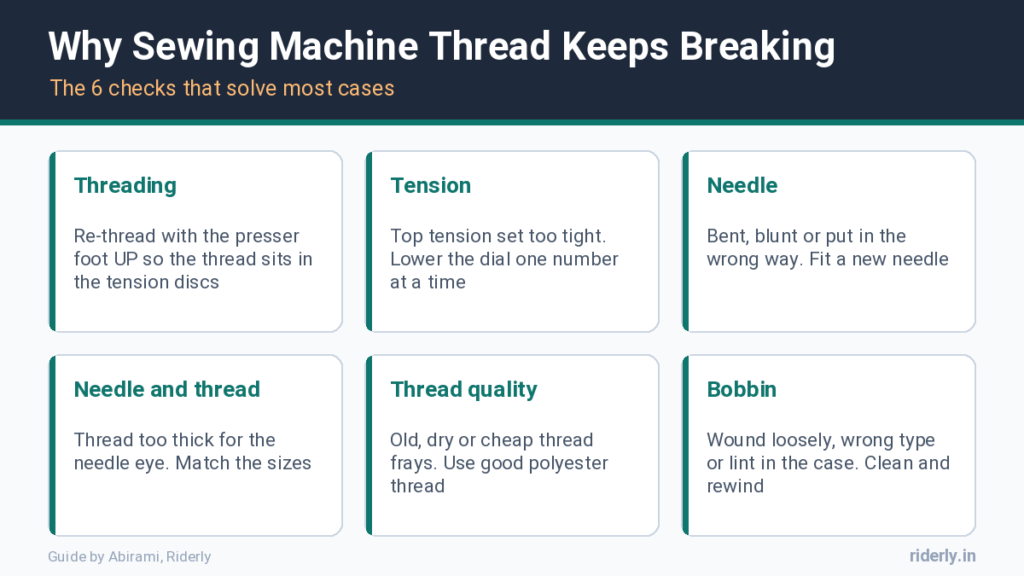
Sewing machine thread breaking is usually caused by wrong threading (often done with the presser foot down), top tension that is too tight, a bent or blunt needle, a needle that is too fine for the thread, or poor quality thread. Switch off, re-thread the machine with the presser foot raised, fit a new needle that matches your thread and fabric, lower the tension slightly and sew a test seam.
- Re-thread the top thread with the presser foot up
- Fit a new needle, inserted all the way up with the flat side to the back
- Match the needle size to the thread and fabric
- Lower the top tension one number and test again
- Use fresh, good quality thread and an evenly wound bobbin
First, Find Out Which Thread Is Breaking
Check the broken end before you change anything. If the thread from the spool is broken above the fabric, you have an upper thread problem. If the thread coming up from under the needle plate is broken, the cause is in the bobbin area. The fixes are different, so this one check saves time.

If both threads break, start with the upper thread checks below. A badly threaded top thread can pull so hard that it snaps the bobbin thread too.
Causes of Upper Thread Breaking and How to Fix Them
These causes come from the troubleshooting chart in the Janome instruction book and the standard threading steps in our guide on how to thread a sewing machine. They apply to most home machines from Usha, Singer, Brother and Janome.

- 1. Wrong threading. The most common cause. If you thread with the presser foot down, the tension discs stay closed and the thread does not sit between them. Raise the presser foot, take the thread out completely and thread again from the spool.
- 2. Missed the take-up lever. If the thread skips the eye of the take-up lever, it jerks and snaps within a few stitches. Turn the handwheel toward you until the lever is at its highest point, then thread it.
- 3. Top tension too tight. A tight dial stretches the thread until it breaks. Lower the tension dial by one number, sew a test seam and repeat if needed.
- 4. Bent, blunt or wrongly fitted needle. A damaged needle cuts the thread. Fit a new needle, push it all the way up and keep the flat side of the shank facing the back on most home machines.
- 5. Needle too fine for the thread. Thick thread in a small needle eye rubs and frays. Use a larger needle or a finer thread. Our sewing machine needle sizes guide has a size chart.
- 6. Poor quality or old thread. Thread that is dry, old or very cheap breaks easily. Pull a length between your hands: if it snaps with little force, change the spool.
- 7. Thread caught on the spool. Many spools have a small cutting notch on one end. If the thread catches there, it stops and breaks. Turn the spool so the notch faces away, and use the spool cap that fits.
- 8. Threads not pulled to the back at the start. Janome lists this as a cause. Hold both thread tails behind the presser foot for the first 2 or 3 stitches.
- 9. Rough spots on the machine. A needle that hit the needle plate can leave a burr that cuts thread. If the thread always breaks at the same point after a needle strike, have a mechanic check the plate and hook.
Causes of Bobbin Thread Breaking
- Bobbin threaded wrongly in the case. Take it out and insert it again so the thread passes through the slot or tension spring as shown on the bobbin cover.
- Lint in the bobbin area. Remove the needle plate and bobbin case and brush out the lint.
- Damaged bobbin. A cracked or bent bobbin does not turn smoothly. Replace it.
- Loosely wound bobbin. A soft, uneven bobbin tangles and breaks. Wind a new bobbin with the thread passing through the bobbin winder tension disc.
- Wrong bobbin type. Use only the bobbin type your manual lists. A plastic bobbin in a machine built for metal bobbins, or the reverse, causes tension problems.
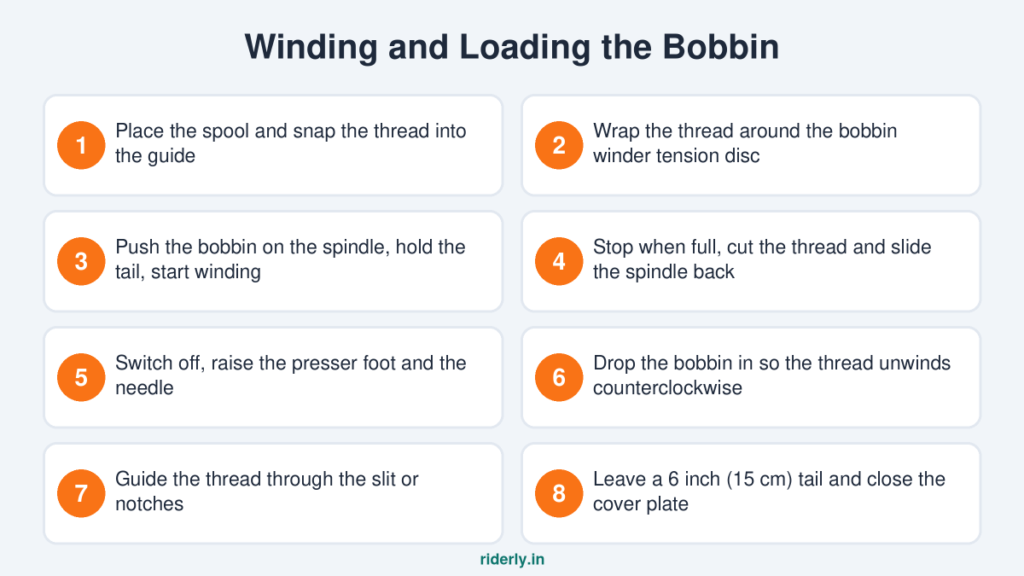
The bobbin case screw sets the bobbin tension. Most home sewers never need to touch it. If you do adjust it, turn it only a small amount and note how far you turned it.
Step-by-Step Fix for Sewing Machine Thread Breaking
Work through these steps in order and sew a test seam on scrap fabric after each one. Stop as soon as the thread holds.

- Switch off the machine and raise the needle to its highest point with the handwheel.
- Remove the top thread completely and re-thread it with the presser foot up, following the diagram on your machine.
- Change the needle. Use a new needle of the right size and type for your fabric.
- Check the spool: correct spool cap, notch facing away, thread unwinding freely.
- Take out the bobbin, clean the bobbin area and insert the bobbin again in the right direction.
- Set the top tension to the middle of the dial, then adjust by one number at a time.
- Sew slowly over thick seams and hold the thread tails for the first few stitches.
How to Stop Thread Breaking in Future
- Change the needle at the start of each big project or when it starts to sound dull
- Buy good quality polyester or cotton thread from a known brand
- Store thread away from direct sun and heat, which dry it out
- Clean lint from the bobbin area regularly
- Always raise the presser foot before threading
- Oil the machine as your manual says
If you are still learning the basics, our guide on how to learn stitching at home has a simple practice plan, and types of sewing machines explains how different machines are threaded.
When to Call a Sewing Machine Mechanic
Call a mechanic if the thread still breaks after a new needle, fresh thread and careful re-threading, if the needle hits the needle plate, or if the machine makes a knocking sound. These can point to hook timing or damaged parts, which need tools and experience to fix. If the repair costs more than the machine is worth, compare current options in our Top 10 Best Sewing Machine For Home In India.
Sources and Further Reading
This guide is based on published manufacturer manuals and reference pages. Riderly has not tested every machine mentioned.
Frequently Asked Questions About Sewing Machine Thread Breaking
The usual causes are threading with the presser foot down, top tension that is too tight, a bent or blunt needle, a needle that is too fine for the thread, and poor quality thread. Re-thread with the foot up and fit a new needle first.
Thread that breaks at the needle usually means the needle is damaged, put in the wrong way, or too small for the thread. Fit a new needle of the right size with the flat side facing back.
Yes. When the top tension is too tight the thread is stretched with every stitch and snaps. Lower the dial one number at a time and test on scrap fabric.
The bobbin may be threaded wrongly in the case, wound loosely, damaged, or the bobbin area may be full of lint. Clean the area, rewind the bobbin and insert it again.
Often, yes. Low quality thread has weak spots and lint that fray in the needle eye. Good polyester thread is a safe choice for most home sewing.
Thick fabric needs a larger needle and a slower speed. A small needle bends and cuts the thread on heavy seams. Use a size 90/14 or 100/16 needle for denim and sew slowly over seams.
The thread tails were probably not held behind the presser foot. Pull both threads to the back and hold them for the first 2 or 3 stitches.
Oil helps the machine run smoothly but rarely fixes thread breaking on its own. Check threading, needle and tension first, then oil the machine as your manual describes.
Final Verdict
In most cases sewing machine thread breaking stops after three simple steps: re-thread with the presser foot up, fit a new needle that matches your thread, and loosen the top tension slightly. Check the bobbin and the spool next. If the thread still breaks after that, a mechanic should check the machine. When it is time for a new machine, start with our Top 10 Best Sewing Machine For Home In India.

Hi, I’m Abirami. I have many years of hands-on experience in sewing and tailoring, from stitching everyday clothes and blouses to doing alterations at home. I write Riderly’s sewing machine reviews and guides, and I use that experience to judge which machines are easy to thread, stitch cleanly and suit Indian homes and beginners.