UPDATED OCTOBER 2026 | NEEDLE GUIDE | SIZE CHART, TYPES AND CHOOSING
Sewing Machine Needle Sizes Explained: Chart, Types and How to Choose
Choosing the right needle fixes many sewing problems before they start. This guide explains what needle sizes like 80/12 mean, which size suits which fabric, the main needle types, and how to know when it is time to change your needle.
Quick Answer: Which Sewing Machine Needle Size Should You Use?
Use a 60/8 to 80/12 needle for light fabrics, 75/11 to 90/14 for medium fabrics and 90/14 to 110/18 for denim and other heavy fabrics. A needle size such as 80/12 combines the metric number (shaft diameter in hundredths of a millimetre) and the US number. A universal needle is the safest all-round choice for a home machine.
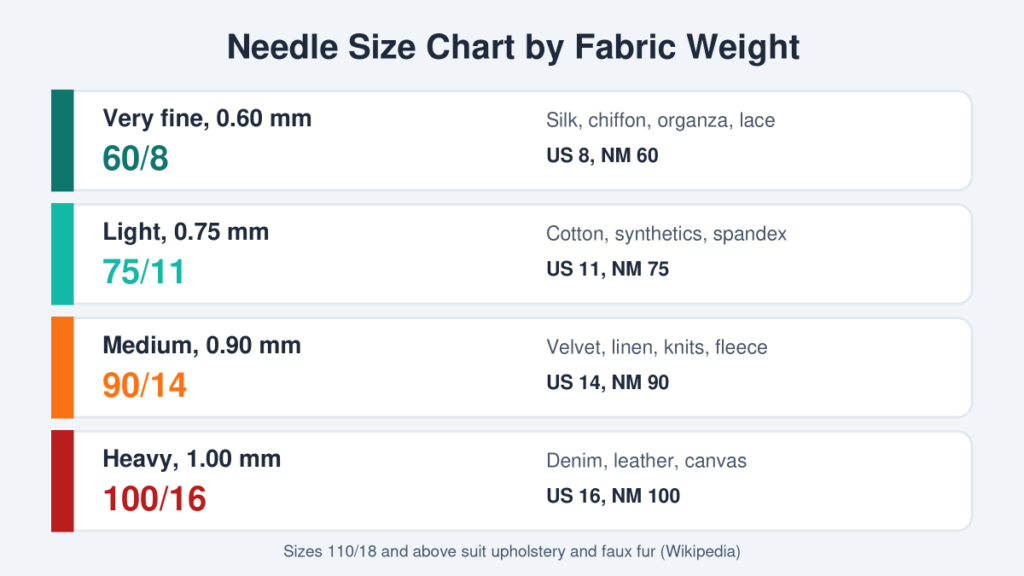
- Fine fabric (silk, chiffon, lace): 60/8, 0.60 mm
- Light fabric (cotton, synthetics): 75/11, 0.75 mm
- Medium fabric (linen, knits, fleece): 90/14, 0.90 mm
- Heavy fabric (denim, canvas, leather): 100/16, 1.00 mm
- Very heavy fabric (upholstery): 110/18 and above
How to Read Needle Sizes: Metric and US Numbers
Needles use two systems. The American (US or Singer) system uses numbers where larger means a larger needle. The international system, known as NM or number metric and established in 1942, gives the shaft diameter in hundredths of a millimetre, measured above the scarf. Packs often show both, such as 100/16. Needle length is standardised, so no separate length code is needed (Wikipedia: Sewing machine needle).
| NM | US | Diameter | Typical fabrics |
|---|---|---|---|
|
60 |
8 |
0.60 mm |
Silk, chiffon, organza, lace |
|
75 |
11 |
0.75 mm |
Cotton, synthetics, spandex |
|
90 |
14 |
0.90 mm |
Velvet, linen, knits, fleece |
|
100 |
16 |
1.00 mm |
Denim, leather, canvas |
|
110 |
18 |
1.10 mm |
Upholstery, faux fur |
|
125 |
20 |
1.25 mm |
Extra heavy fabric |
The table follows the Wikipedia needle reference above. Schmetz, a major needle maker, lists universal needles from 60/8 to 120/19 (Schmetz needle guide).
Parts of a Sewing Machine Needle
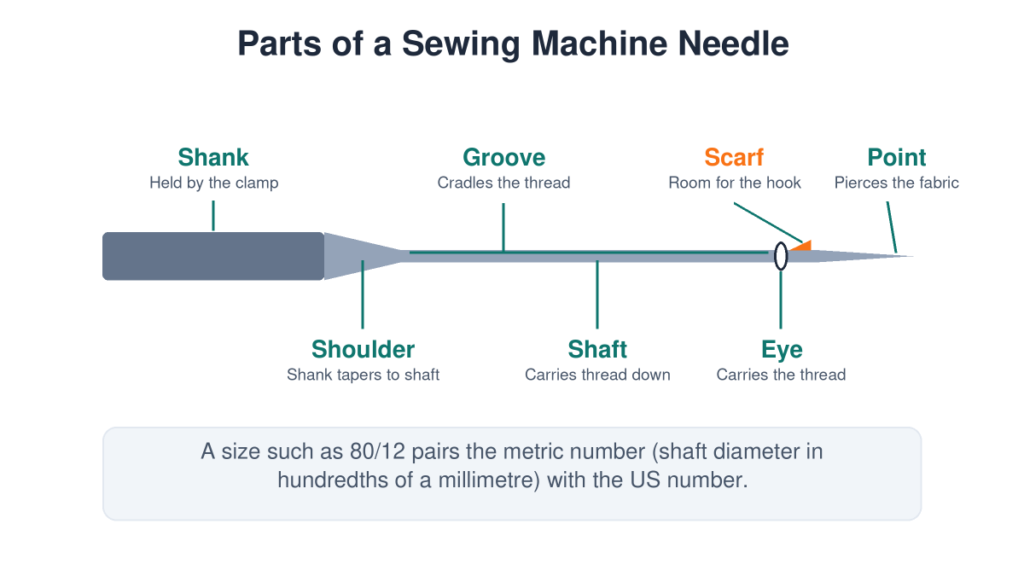
- Shank: the thick top clamped by the needle holder.
- Shoulder: where the shank tapers down to the shaft.
- Shaft: carries the thread and eye through the fabric to the bobbin.
- Groove: a channel on the front of the shaft that lets the thread lie close to the needle.
- Scarf: a recess behind the eye that gives the hook or shuttle room to pass close by.
- Eye: the hole that carries the thread.
- Point: the tip that pierces the fabric by parting threads or cutting a hole.
These definitions follow the Wikipedia reference. Understanding the parts helps you spot damage, such as a bent shaft or a blunt point.
Types of Sewing Machine Needles and What They Do

- Universal (60/8 to 120/19): for general knits and wovens on domestic machines.
- Jersey or ballpoint (70/10 to 100/16): rounded tip for knits and some stretch fabrics.
- Stretch (75/11, 90/14): special scarf and eye to prevent skipped stitches on spandex-rich fabric.
- Denim or jeans (70/10 to 110/18): strong, sharp point for tightly woven and thick fabric.
- Leather (70/10 to 110/18): triangular point for clean holes in leather, vinyl and heavy synthetics.
- Microtex or sharp (60/8 to 90/14): slim and sharp for fine woven fabric and straight stitching.
- Topstitch (80/12 to 100/16): sharp point and large eye for thick decorative thread.
- Quilting (75/11, 90/14): tapered point and strong shaft for layered fabric.
- Embroidery (75/11, 90/14): larger eye and special scarf to avoid thread shredding.
- Twin and triple: two or three needles on one shaft for decorative stitching on suitable machines.
Sizes above come from the Schmetz needle guide (Schmetz) and the Wikipedia reference. Needle types for domestic machines have a flat shank face so they sit correctly. Industrial and serger needles are different and do not fit domestic machines.
How to Choose the Right Needle for Your Fabric
- Step 1: weigh the fabric: fine, light, medium or heavy.
- Step 2: pick the size from the chart above.
- Step 3: pick the type: universal for most woven fabric, ballpoint or stretch for knits, denim for jeans, leather for leather.
- Step 4: match the needle eye to the thread. Thick topstitch thread needs a topstitch needle with a larger eye.
- Step 5: sew a test seam on scrap fabric. If stitches skip or the fabric puckers, change the needle size or type.
Still choosing your machine? Read how to choose a sewing machine and see types of sewing machines.
How to Change a Sewing Machine Needle
- Switch off and unplug the machine.
- Raise the needle to its highest position and lower the presser foot.
- Loosen the clamp screw and remove the old needle.
- Insert the new needle with the flat side facing the back and push it all the way up.
- Tighten the clamp screw and raise the presser foot.
- Re-thread the machine and test on scrap fabric.
The flat side direction applies to many domestic machines. Check your manual. Our threading guide covers re-threading, and the mini sewing machine guide covers needle changes on mini models.
When to Change a Sewing Machine Needle
- At the start of each new project or when you change fabric type. Consumer Reports advises changing needles after each project or fabric type (Consumer Reports buying guide, archived 2016).
- When stitches skip, thread shreds or the fabric snags.
- After sewing over a pin or hitting a hard seam.
- When the needle looks bent or the point feels blunt.
Needle material also matters. Most needles are hardened steel plated with nickel or chrome, and titanium nitride coatings last longest (Wikipedia).
Common Needle Problems and Fixes
- Skipped stitches: wrong type for the fabric, a dull needle or a needle inserted incorrectly. Try a ballpoint or stretch needle on knits.
- Thread keeps shredding: the eye is too small for the thread. Use a larger needle or a topstitch needle.
- Fabric puckers: the needle is too large for the fabric. Go down a size.
- Needle breaks: the fabric is too thick for the size, or you pulled the fabric while sewing. Use a heavier needle and let the machine feed the fabric.
- Visible holes: a larger needle leaves larger holes. Use the smallest size that sews the fabric.
Sources and Further Reading
This guide is based on needle maker guidance and reference pages. Riderly has not tested every needle type mentioned.
Frequently Asked Questions About Sewing Machine Needle Sizes
The first number is the metric size (NM), the shaft diameter in hundredths of a millimetre. The second is the US size. For example 90/14 is a 0.90 mm shaft in US size 14.
Most light to medium cotton sews well with 75/11 to 90/14. Use a universal needle unless the fabric is a knit.
Use 90/14 to 110/18 with a denim or jeans needle. Thick seams may need a heavier size and slow stitching.
A universal 80/12 is a common starting size for medium fabrics, and it is a safe pick for general home sewing.
A universal needle has a slightly rounded point for wovens and knits. A ballpoint or jersey needle has a more rounded tip that slides between knit loops instead of piercing them.
At the start of each project or fabric type, and whenever stitches skip, thread shreds or the needle feels dull or bent.
On many domestic machines the flat side faces the back. Check your manual, because some machines differ.
Use the type your machine takes. Domestic machines need a needle with a flat shank face, while industrial and serger needles are different and do not fit. See types of sewing machines.
Final Verdict
Match the needle size to the fabric weight, pick the right type, and change it often. A universal 80/12 covers most home sewing, while denim, knits and leather each need their own needle. Keep a small set of needles beside your machine, and choose a machine that accepts standard needles using the how to choose a sewing machine guide and our Top 10 Best Sewing Machine For Home In India.
Hi, I’m Abirami. I have many years of hands-on experience in sewing and tailoring, from stitching everyday clothes and blouses to doing alterations at home. I write Riderly’s sewing machine reviews and guides, and I use that experience to judge which machines are easy to thread, stitch cleanly and suit Indian homes and beginners.