UPDATED OCTOBER 2026 | TROUBLESHOOTING GUIDE | THREAD JAMS, STUCK NEEDLE AND NOISE
Why Is My Sewing Machine Jamming
A sewing machine jamming in the middle of a seam is frustrating, and pulling the fabric out by force can bend the needle or damage the hook. This guide explains why sewing machines jam, how to clear a jam safely, and what to change so it does not happen again.

Quick Answer: Why Is My Sewing Machine Jamming?
A sewing machine usually jams because thread has tangled under the fabric (a thread nest from top thread that missed the tension discs), thread or lint is caught in the hook area, the bobbin is the wrong type or put in wrongly, or thin fabric was pulled into the needle plate. To fix it, switch off, cut the top thread, gently turn the handwheel toward you, remove the needle plate and bobbin, clear the threads and lint, then re-thread and test.
- Never force the handwheel or pull the fabric hard
- Most jams start with a thread nest under the fabric
- Clean the hook and bobbin area regularly
- Hold the thread tails for the first few stitches
- Do not start sewing right at the edge of thin fabric
Common Causes of Sewing Machine Jamming
Several of these causes appear in the troubleshooting chart of the Janome instruction book, which lists thread caught in the race hook as a reason the machine will not run or is noisy.

- Thread nest under the fabric. When the top thread is not in the tension discs, it piles up under the fabric and locks the machine. This is the most common jam. Re-thread with the presser foot up. Our guide on how to thread a sewing machine shows the full path.
- Thread tails not held at the start. Loose tails get pulled down into the bobbin area. Hold both tails behind the presser foot for the first 2 or 3 stitches.
- Thread caught in the race hook. A broken end can wrap around the hook and stop it. Remove the needle plate and bobbin case to clear it.
- Lint build-up. Lint packs under the feed dogs and in the hook, which makes the machine stiff and noisy. Brush it out regularly.
- Bobbin problems. The wrong bobbin type, a bobbin inserted the wrong way, or an overfilled bobbin can jam the hook.
- Fabric pulled into the needle plate. Thin fabric started right at the edge can be pushed down into the plate hole. Start a little in from the edge, or start on a small scrap and sew onto your fabric.
- Bent or wrong needle. A bent needle can hit the needle plate or hook. A needle too fine for thick fabric bends and jams. Fit a new needle of the right size from our sewing machine needle sizes guide.
- Stitch length too short. Very short stitches pile thread in one place. Janome lists stitches that are too fine as a reason fabric does not feed.
- Bobbin winder still engaged. If the spindle is still pushed to the right, the machine will not sew. Push it back to the left.
How to Unjam a Sewing Machine Step by Step

- Stop sewing as soon as you hear a clunk or the fabric stops moving. Switch off and unplug the machine.
- Cut the top thread between the spool and the needle, and raise the presser foot.
- Turn the handwheel gently toward you to raise the needle. If it does not move, rock it back and forth a little. Never force it.
- Ease the fabric out. Snip any threads holding it under the plate with small scissors instead of pulling.
- Remove the needle plate and bobbin. Most plates come off with one or two screws. Take out the bobbin and the bobbin case if your machine allows it.
- Clear the hook area. Pick out every loose thread with tweezers and brush out the lint. Check that no thread is wrapped around the hook.
- Check the needle. If it touched the plate or hook, replace it.
- Put everything back, re-thread the top thread with the presser foot up, re-insert the bobbin and sew a test seam on scrap fabric.
If the handwheel stays stuck after you clear the thread, or the machine knocks when it runs, stop and take it to a mechanic. A strong jam can knock the hook timing out.
Machine Jams at the Start of a Seam
Jams that happen in the first few stitches are nearly always thread tails or thin fabric being pulled down. Lower the needle into the fabric before you start, hold both thread tails behind the foot, and start about 1 cm in from the edge. On fine fabric, place a strip of paper under it or start on a small scrap of fabric.
Machine Jams on Thick Fabric
Denim, canvas and thick seams push a home machine hard. Use a jeans needle in size 90/14 or 100/16, lengthen the stitch slightly, sew slowly and turn the handwheel by hand over the thickest part. If your machine still struggles, it may not be suited to heavy work. Our types of sewing machines guide explains which machines handle heavy fabric.

How to Prevent Sewing Machine Jams
- Thread with the presser foot up and check the take-up lever every time
- Hold the thread tails for the first few stitches
- Clean lint from the bobbin area after every few hours of sewing
- Use the correct bobbin type and do not overfill it
- Change the needle at the start of each big project
- Oil the machine as your manual says, and do not over-oil
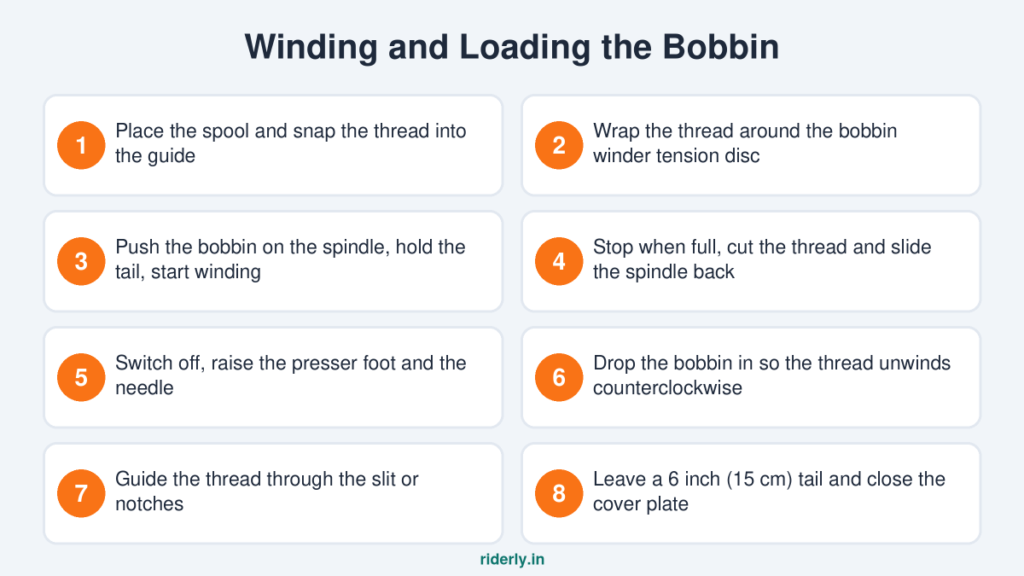
Learning good habits early prevents most jams. Our guide on how to learn stitching at home includes a simple routine.
Sources and Further Reading
This guide is based on published manufacturer manuals and reference pages. Riderly has not tested every machine mentioned.
Frequently Asked Questions About Sewing Machine Jamming
The most common causes are a thread nest from top thread that missed the tension discs, thread caught in the hook, lint build-up, a wrong or badly inserted bobbin, and thin fabric pulled into the needle plate.
Switch off, cut the top thread, raise the presser foot, gently turn the handwheel toward you, snip the threads holding the fabric, remove the needle plate and bobbin, clear the threads and lint, then re-thread and test.
Thread is usually wrapped around the hook. Remove the needle plate and bobbin case and clear it. If the wheel stays stuck after that, take the machine to a mechanic.
Loose thread tails or thin fabric get pulled down into the needle plate. Hold the tails behind the foot for the first stitches and start a little in from the edge.
Yes. Lint packed around the feed dogs and hook makes the machine stiff and can stop it. Brush the bobbin area clean regularly.
Yes. A bobbin of the wrong size or type does not turn correctly in the case and can jam the hook. Use the bobbin listed in your manual.
The needle may be too fine or the machine may be underpowered for the fabric. Use a jeans needle, sew slowly and turn the handwheel by hand over thick seams.
Take it in if the handwheel stays stuck after you clear the thread, if the needle keeps hitting the plate, or if the machine knocks or skips stitches after a jam. These can mean a timing problem.
Final Verdict
Most sewing machine jamming starts with a thread nest or thread caught in the hook. Stop at once, switch off, clear the threads gently, and re-thread with the presser foot up. Keep the bobbin area clean and hold the thread tails at the start of every seam. If your machine jams often even after these steps, it may be time to compare models in our Top 10 Best Sewing Machine For Home In India.

Hi, I’m Abirami. I have many years of hands-on experience in sewing and tailoring, from stitching everyday clothes and blouses to doing alterations at home. I write Riderly’s sewing machine reviews and guides, and I use that experience to judge which machines are easy to thread, stitch cleanly and suit Indian homes and beginners.