UPDATED OCTOBER 2026 | COMPARISON GUIDE | HAND, TREADLE AND ELECTRIC MACHINES
Manual vs Electric Sewing Machine: Which Is Better for Home
Manual vs electric sewing machine is one of the first choices every Indian home faces when buying a machine. Both can stitch well, but they suit different people. This guide compares them point by point and tells you which one fits the way you sew.

Quick Answer: Manual vs Electric Sewing Machine, Which Is Better?
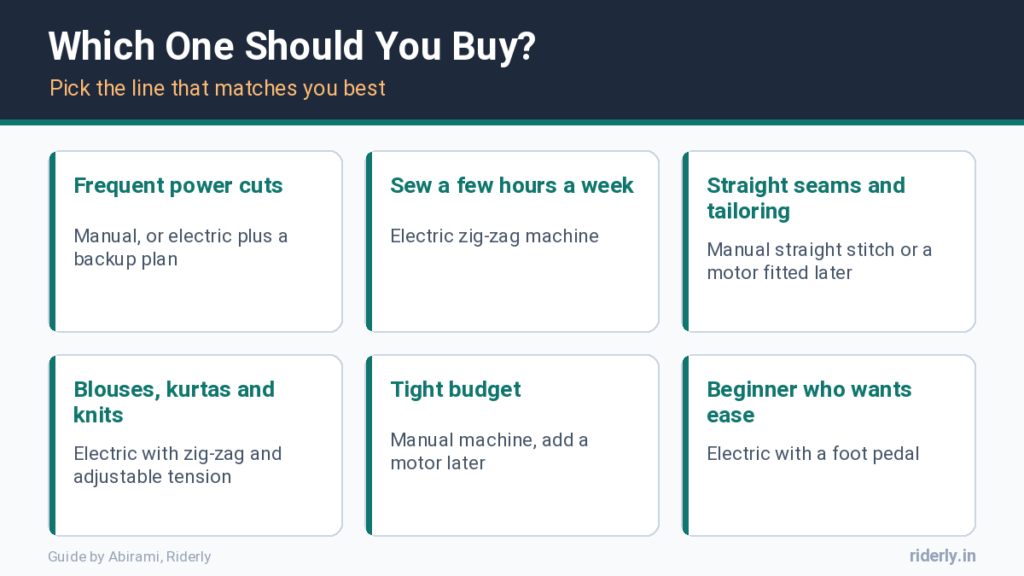
For most homes that sew regularly, an electric sewing machine is better because it is faster, leaves both hands free to guide the fabric and usually offers zig-zag and other stitches. A manual sewing machine is better if you have frequent power cuts, a tight budget, or mainly sew straight seams and want a simple, long-lasting machine that any local mechanic can repair.
- Electric: faster, both hands free, more stitches
- Manual: no electricity needed, simple and cheap to repair
- Blouses, kurtas and stretch fabric: choose electric zig-zag
- Straight tailoring work on a budget: manual is enough
- A motor can be fitted to many manual machines later
What Is a Manual Sewing Machine?
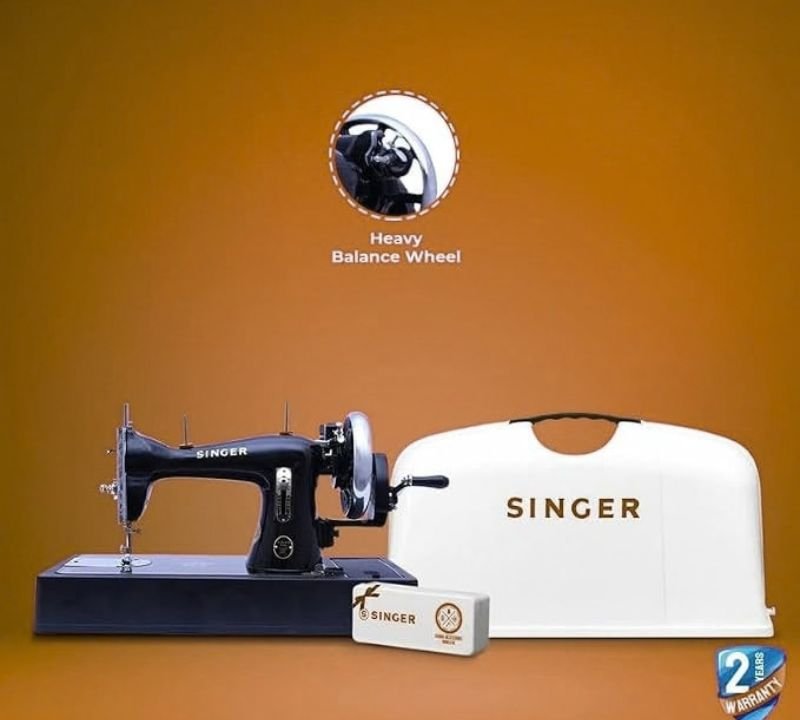
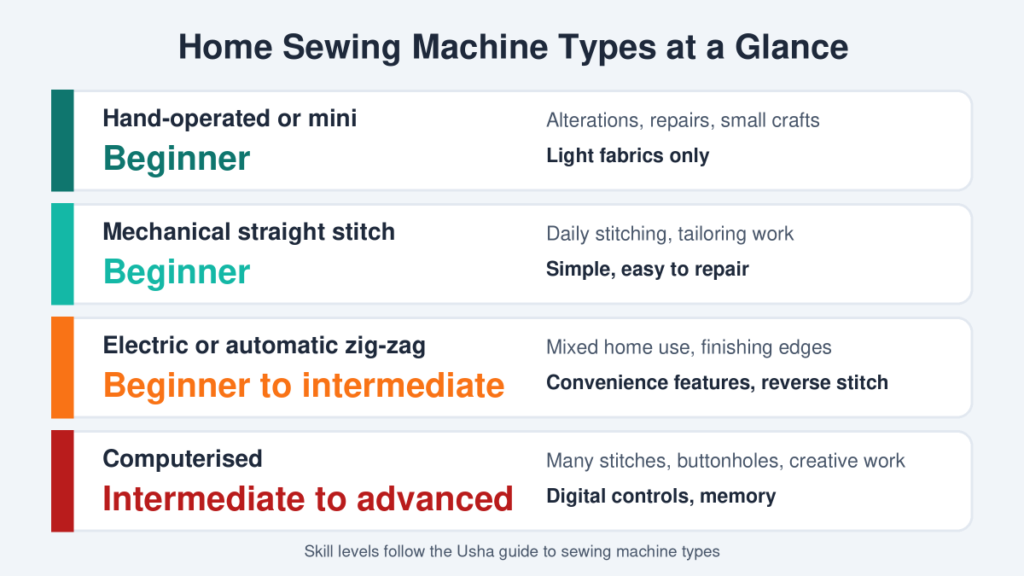
A manual sewing machine runs on your own effort. A hand machine has a handle on the wheel, and a treadle machine sits on a stand with a foot treadle. The classic black Usha and Singer straight stitch machines seen in many Indian homes are manual machines. Many of them are sold used, so read our second-hand sewing machine buying guide before you buy one. Usha describes manual machines as simple and dependable and rates them for beginners in its guide to machine types.
What Is an Electric Sewing Machine?
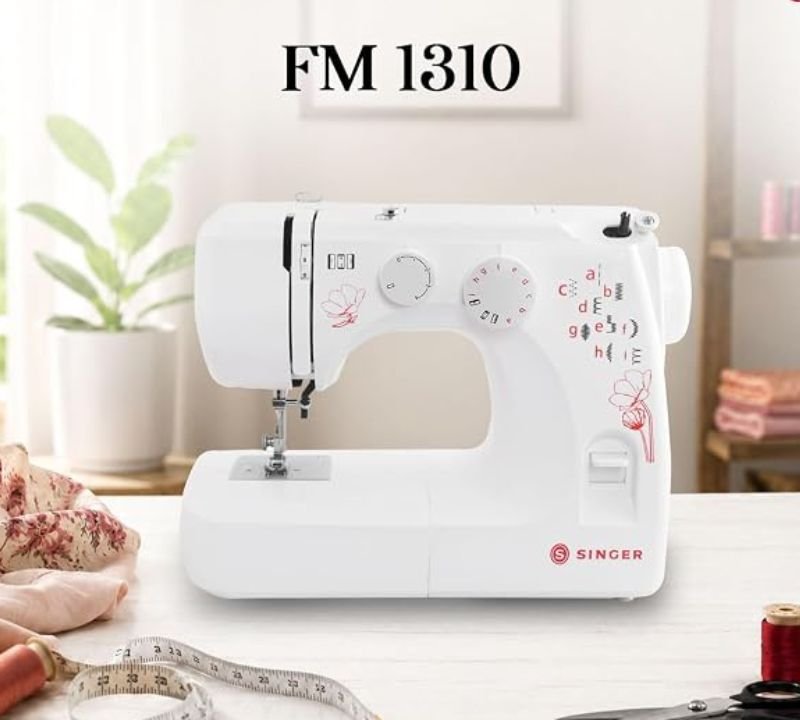
An electric sewing machine has a built-in motor controlled by a foot pedal. Most home electric machines are zig-zag models with several built-in stitches, reverse sewing and a buttonhole option. Usha rates electric and automatic machines for beginner to intermediate sewers who stitch often. Some sellers also offer a manual machine with a separate motor fitted, which is sold as electric but sews like a straight stitch machine.
Our guide to types of sewing machines explains every class, including computerised and industrial machines.
Manual vs Electric Sewing Machine: Point by Point
- Power: a manual machine works anywhere, any time. An electric machine stops during a power cut unless you have an inverter.
- Speed: an electric motor sews much faster and at a steady speed set by the pedal. On a manual machine the speed depends on your effort.
- Control: with a hand machine one hand turns the wheel, so only one hand guides the fabric. Treadle and electric machines leave both hands free.
- Stitches: most manual machines sew a straight stitch only. Electric zig-zag machines add zig-zag for finishing edges, stretch stitches and decorative stitches.
- Fabric: a well-built manual machine handles cotton and many medium fabrics well. Electric machines with stronger motors make thick seams and long projects easier.
- Learning: electric machines are easier for beginners because both hands guide the fabric. Manual machines teach control and are hard to damage.
- Maintenance: manual machines have few parts and any local mechanic can repair them. Electric machines need a mechanic who knows the brand, and parts such as motors and pedals add cost.
- Cost: manual machines cost less to buy. See current prices in our best sewing machine under 5000 list and our best sewing machine under 10000 list.
- Noise and space: both are fairly quiet. Treadle machines need floor space, while hand and electric machines fit on a table.
Who Should Buy a Manual Sewing Machine
- You live in an area with frequent or long power cuts
- You mainly sew straight seams: petticoats, simple kurtas, alterations, bags
- You want the lowest buying and repair cost
- You want a machine that lasts for many years with basic care
Who Should Buy an Electric Sewing Machine
- You sew a few hours every week or plan to take small orders
- You stitch blouses, kurtas, salwar suits and kids clothes
- You sew stretch fabric or want to finish raw edges with zig-zag
- You are a beginner who wants both hands free to guide the fabric
Can You Convert a Manual Machine to Electric?
Yes, many manual straight stitch machines can take an external motor with a foot pedal. The motor mounts behind the machine and drives the handwheel with a belt. This adds speed and frees both hands, but it does not add zig-zag or other stitches. Ask a local mechanic to fit it so the belt tension and pulley size are correct. Our how to choose a sewing machine guide covers what else to consider.
Our Recommendation
If you are buying one machine for a home that sews regularly, choose an electric zig-zag machine. It does everything a manual machine does and more, and it is easier to learn on. Choose a manual machine if power cuts are common, if your budget is tight, or if you only need straight seams. Compare current machines of both types in the Top 10 Best Sewing Machine For Home In India, and see trusted makers in our best sewing machine brands in India guide.

Sources and Further Reading
This guide is based on published manufacturer manuals and reference pages. Riderly has not tested every machine mentioned.
Frequently Asked Questions: Manual vs Electric Sewing Machine
For regular home sewing, an electric machine is better because it is faster, leaves both hands free and offers more stitches. A manual machine is better for power cut areas, tight budgets and straight seam work.
Yes. A foot pedal leaves both hands free to guide the fabric, which makes learning easier. Start at a slow speed and practise on scrap fabric.
Yes. Many tailors stitch blouses on straight stitch machines. You will need another way to finish raw edges, such as hand finishing or a separate overlock machine.
No. Home sewing machine motors use little power compared with most kitchen appliances. Check the wattage on the listing for your model.
Yes, most manual straight stitch machines can take an external motor and foot pedal. It adds speed but not new stitches. Have a mechanic fit it.
A well-kept manual machine can last decades because it has few parts. Electric machines also last many years with care, but motors, pedals and circuit parts can need replacing.
A strong manual machine with the right needle can sew medium and some thick fabric. For regular denim or canvas work, a heavy-duty machine is better.
An electric machine uses a motor with dials and knobs. A computerised machine adds digital controls, more stitches and automatic features, and takes longer to learn.
Final Verdict
In the manual vs electric sewing machine choice, electric wins for most homes that sew often, thanks to speed, both hands free and zig-zag stitches. Manual still makes sense for power cut areas, tight budgets and straight seam tailoring. Decide how often and what you will sew, then compare models in our Top 10 Best Sewing Machine For Home In India.
Hi, I’m Abirami. I have many years of hands-on experience in sewing and tailoring, from stitching everyday clothes and blouses to doing alterations at home. I write Riderly’s sewing machine reviews and guides, and I use that experience to judge which machines are easy to thread, stitch cleanly and suit Indian homes and beginners.