UPDATED OCTOBER 2026 | BUYING ADVICE | MINI VS FULL-SIZE MACHINES
Is a Mini Sewing Machine Worth Buying
Is a mini sewing machine good, or is it money wasted? The answer depends on what you plan to sew. This guide explains what a mini machine does well, where it falls short, who should buy one and what to check before you order.

Quick Answer: Is a Mini Sewing Machine Good?
Yes, a mini sewing machine is good for light work: hems, small repairs, cotton clothes, crafts and occasional use in a small home. It is not good for regular tailoring, blouse stitching, denim or thick layers, because its motor, frame and stitch options are limited. If you plan to sew every week, a full-size mechanical or electric machine is the better buy.
- Worth it for repairs, hems, kids crafts and travel
- Not worth it for blouses, denim or daily tailoring
- Works best on cotton, lining and thin fabric
- Check power options, spare bobbins and service before you buy
- Plan to move to a full-size machine if you sew often
What Is a Mini Sewing Machine?
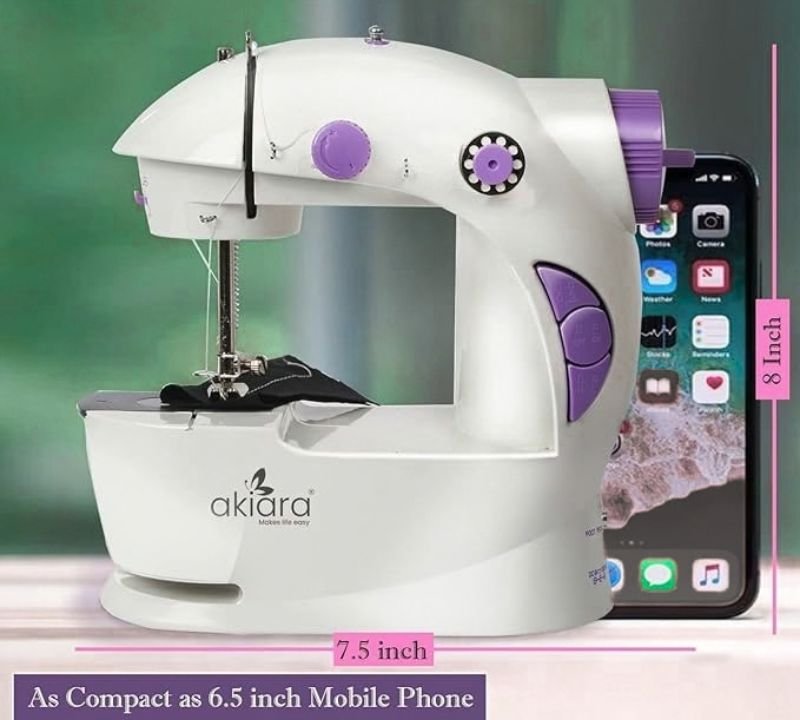
A mini sewing machine is a small, light household machine that runs on an adaptor, batteries or a small foot pedal. The minis in our best sewing machine under 5000 list weigh about 3 to 3.5 kg and offer around 12 stitches. The manual for one common mini model lists a foot controller, spare bobbins, a needle threader and a needle in the box, with power from 4 AA batteries or an adaptor.
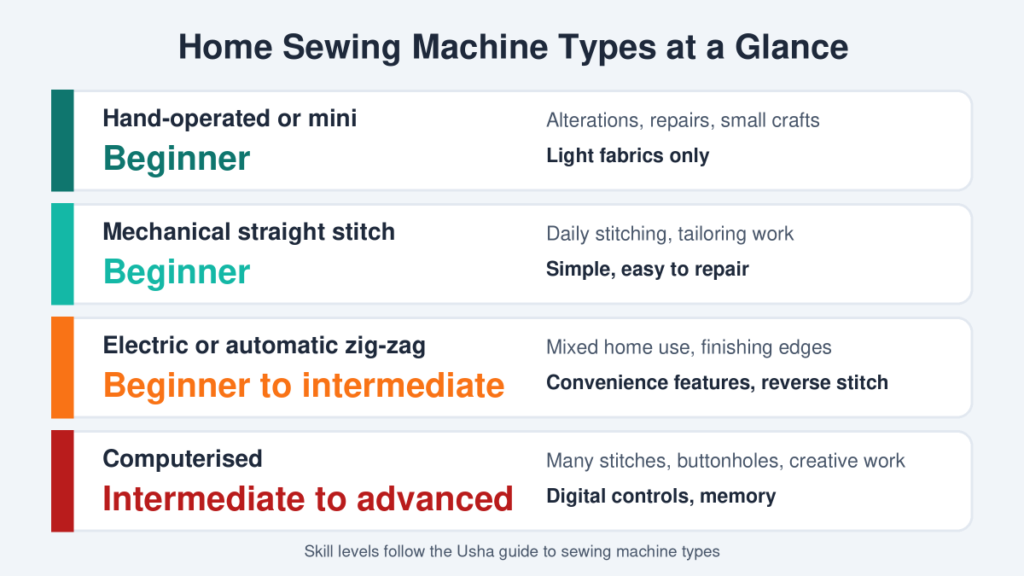
Usha groups home machines into manual, electric, automatic, computerised, industrial and embroidery classes in its guide to machine types. Mini machines sit below all of these in size and power. Our types of sewing machines guide explains where each type fits.
What a Mini Sewing Machine Does Well
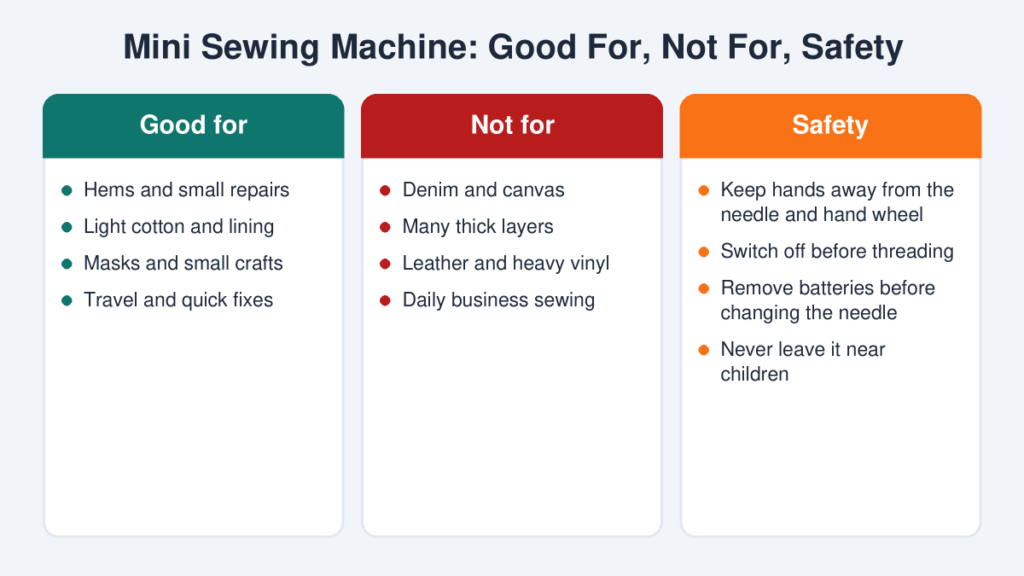
- Quick repairs: torn seams, loose hems and small alterations
- Light fabric: cotton, lining, poplin and thin dress material
- Small projects: cushion covers, pouches, masks and school crafts
- Small homes: it fits in a drawer and needs no table
- Learning: a simple way to try sewing before you spend more, with adult supervision for children
Limits of a Mini Sewing Machine
- Thick fabric: denim, canvas and several layers are too heavy for most minis. The needle can stall or break
- Speed and power: the small motor slows down on long seams, and more so on batteries
- Stitch quality: stitches are fine for repairs but less even than on a full-size machine
- Fewer features: most minis have no zig-zag width control, no buttonhole and limited tension adjustment
- Durability: plastic bodies and small parts wear out sooner with regular use
- Service: many mini machines are sold online with little local repair support
These limits are the reason we do not suggest a mini machine for regular tailoring work. Our guide on how to use a mini sewing machine lists the fabrics to avoid.
Who Should Buy a Mini Sewing Machine
- You only need to fix hems, seams and small tears at home
- You sew a few times a month, not every day
- You live in a hostel, rented room or small flat
- You want a simple machine for craft projects
- You want to find out if you enjoy sewing before buying a bigger machine
Who Should Not Buy One
- You plan to stitch blouses, kurtas or salwar suits for the family
- You want to take tailoring orders or start a small boutique
- You sew jeans, curtains, bags or other heavy items
- You want zig-zag, overlock-style edges or buttonholes

For these needs, a mechanical straight stitch or an electric zig-zag machine is the better long-term buy. Our guide on how to choose a sewing machine helps you pick the right type and budget.
What to Check Before Buying a Mini Sewing Machine
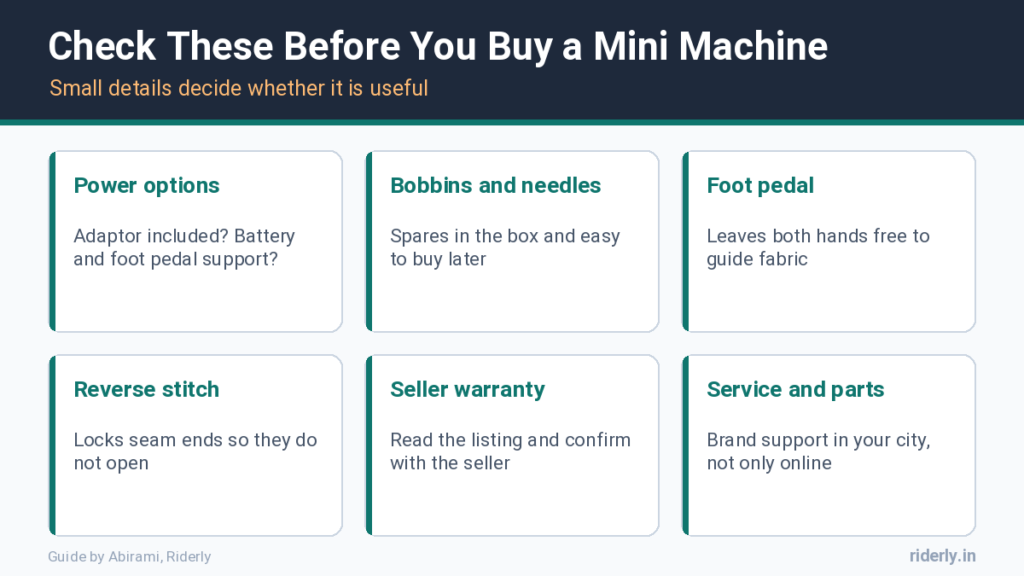
- Power: confirm the adaptor is in the box. Some listings show it but sell it separately
- Foot pedal: a pedal leaves both hands free and gives better control than a button
- Bobbin type: note the bobbin type and buy spares early
- Reverse stitch: useful for locking seam ends
- Warranty: read the listing and confirm the terms with the seller
- Reviews: look for patterns in buyer feedback about motor failure or thread jams
Mini Machine or Full-Size Machine: The Simple Rule
Think about the next six months. If most of your work is repairs and light cotton, a mini sewing machine is good value. On a very tight budget, see our best sewing machine under 2000 list for the mini machines worth buying at that price. If you want to stitch full garments or sew every week, spend a little more on a full-size machine now, because you will outgrow a mini quickly. Compare full-size options in our best sewing machine under 10000 list and the Top 10 Best Sewing Machine For Home In India.
Sources and Further Reading
This guide is based on published manufacturer manuals and reference pages. Riderly has not tested every machine mentioned.
Frequently Asked Questions About Mini Sewing Machines
Yes for light home work such as hems, repairs, cotton clothes and crafts. It is not suited to regular tailoring, blouses or heavy fabric, where a full-size machine works better.
It can sew simple seams on light blouse fabric, but fitting, finishing and repeated stitching are hard on a mini. For regular blouse stitching, a full-size electric zig-zag machine is the better choice.
Not reliably. Most mini machines struggle with denim and thick layers, and the needle may break. Use a full-size or heavy-duty machine for jeans.
It is fine for a beginner who wants to try simple projects. A beginner who plans to learn tailoring will progress faster on a mechanical or electric full-size machine.
It depends on the model and how often it is used. Mini machines have small motors and plastic parts, so they usually wear out sooner than full-size machines under regular use.
Many work on 4 AA batteries as well as an adaptor. Battery power is handy during power cuts, but the motor runs slower on weak batteries.
A full-size machine has a stronger motor and frame, more stitch options, better tension control and handles thicker fabric. A mini machine is smaller, lighter and simpler, and suits light fabric only.
Compare current models, prices and buyer feedback in our best sewing machine under 5000 guide, and check the points in the buying checklist above before you order.
Final Verdict
A mini sewing machine is good when your needs are small: repairs, hems, cotton and crafts. It is not a replacement for a full-size machine if you plan to stitch garments or sew often. Be clear about what you will sew, check the power options and spare parts, and choose from our best sewing machine under 5000 list or, for regular sewing, the Top 10 Best Sewing Machine For Home In India.
Hi, I’m Abirami. I have many years of hands-on experience in sewing and tailoring, from stitching everyday clothes and blouses to doing alterations at home. I write Riderly’s sewing machine reviews and guides, and I use that experience to judge which machines are easy to thread, stitch cleanly and suit Indian homes and beginners.